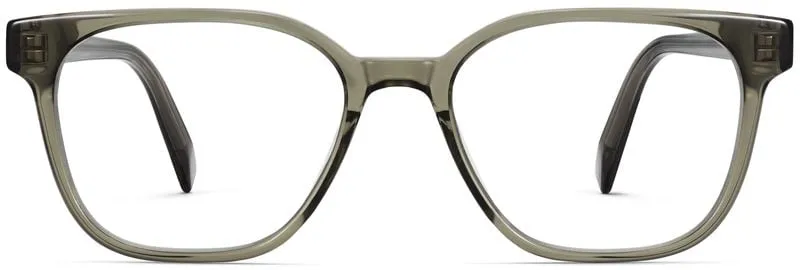
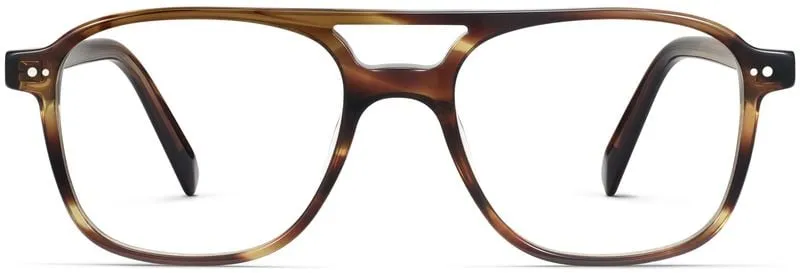
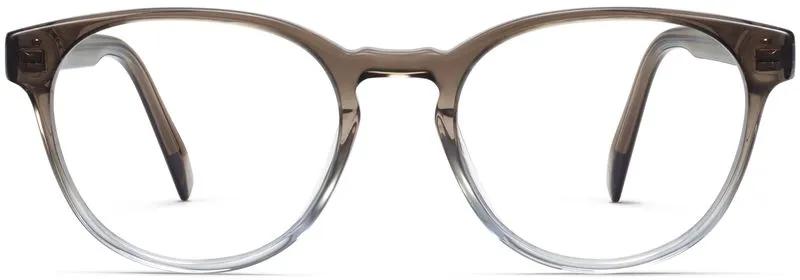
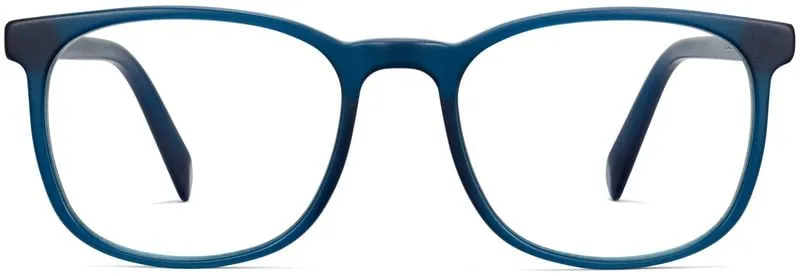
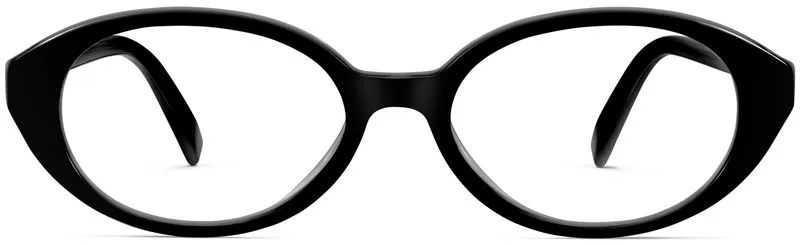
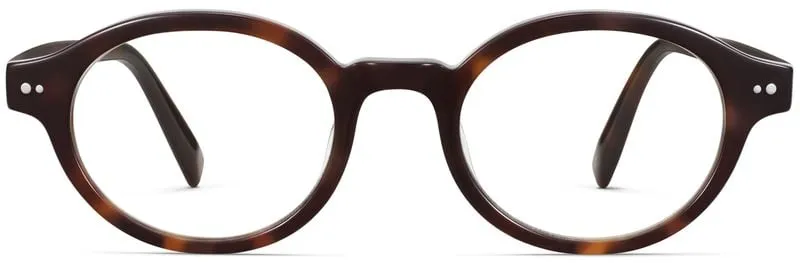
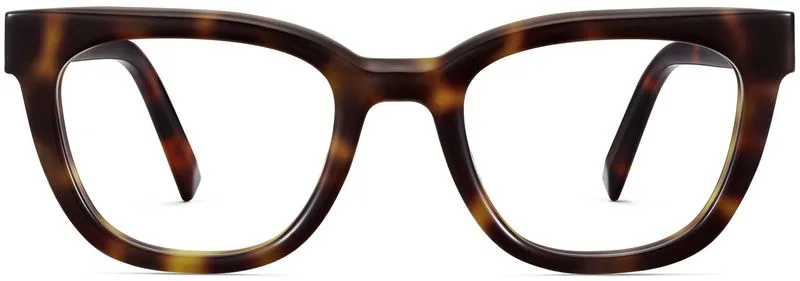
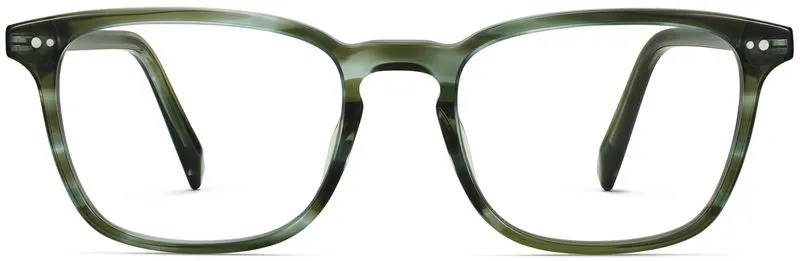
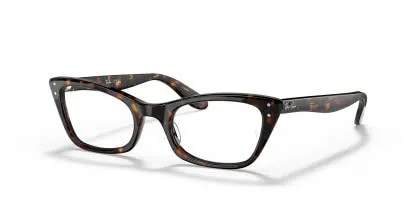
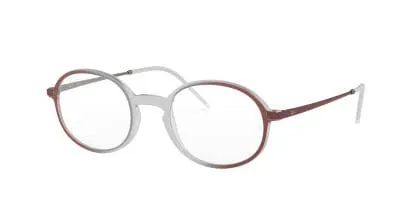
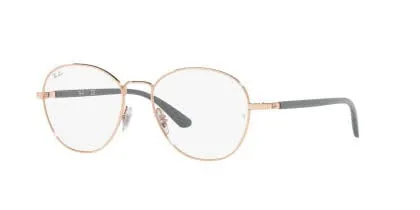
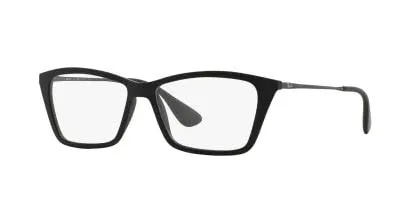
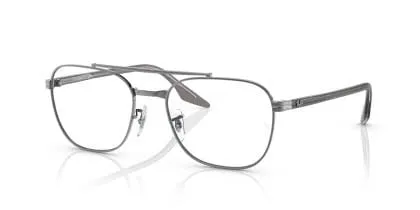
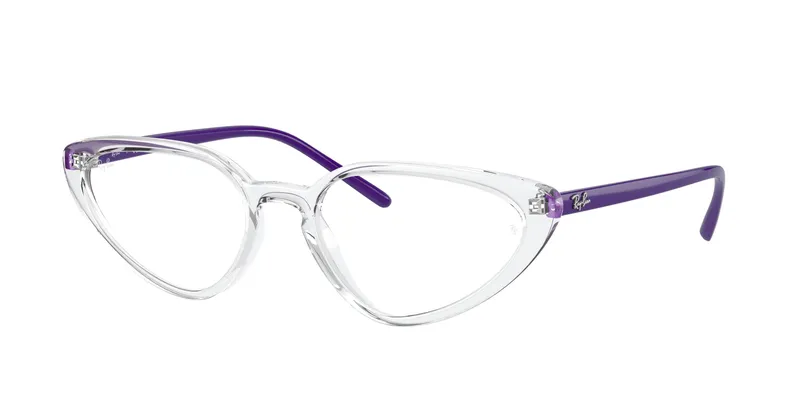
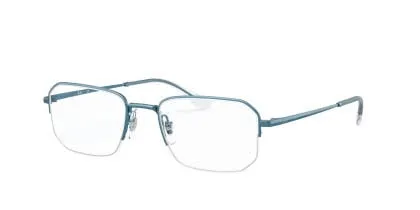
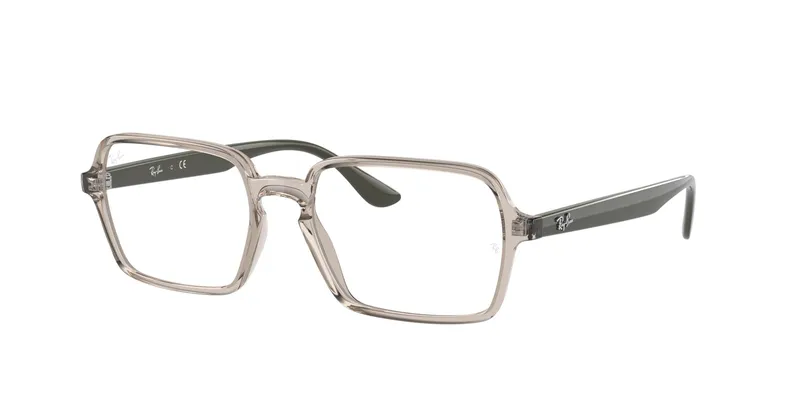
Warby Parker and Ray-Ban sit on opposite ends of the eyewear timeline. Ray-Ban, founded in 1937 and now owned by Luxottica, defined categories that every other brand references: the Aviator, the Wayfarer, the Clubmaster. Warby Parker, founded in 2010, launched as a DTC challenger, popularized the home try-on, and built its own in-house design voice rather than licensing classics.
On price, Warby Parker undercuts Ray-Ban cleanly. Warby Parker frames with single-vision lenses included typically run $95 to $195. Ray-Ban frames typically sell in the $150 to $250 range for core optical styles, with premium materials, collaborations, and sunglass icons reaching higher, and lenses often billed separately through a retailer.
Aesthetically, Warby Parker is preppy-modern: keyhole bridges, clean acetate colorways, slim metals, and approachable shapes that read contemporary. Ray-Ban's catalog is heritage-driven, with silhouettes that have been in continuous production for decades and a design vocabulary tied to 20th-century cinema and aviation.
Warby Parker is for the shopper who wants a clean modern look, a simpler shopping experience, and lenses bundled into the sticker price. Ray-Ban is for the shopper who wants a specific, recognizable icon, values that 1937 pedigree, and is fine paying more for the name and the materials behind it.
Neither brand is objectively better — they answer different questions. Browse both selections below to compare price tiers, shapes, and aesthetics side-by-side before deciding.